
Construction sector - Glenigan index figures indicate that the construction sector is stuck in neutral
Property sales - The number of council homes sold under the Right to Buy scheme increased by 90% in 2025
Regional outlook - Sales activity in Devon and Cornwall has not picked up despite holiday let reforms
The latest Glenigan Index indicates that the construction sector is stuck in neutral and struggling to regain momentum.
In the three months to the end of July, the value of work starting on-site declined by 11% and was 29% lower than last year’s levels. Residential construction starts also saw a drop, falling by 25% when compared with the preceding three months, a 46% reduction versus 2025 levels.
It seems the overall construction sector is being impacted by ongoing global conflict and domestic political change, with plans at risk of being halted and private investors unsure about releasing investment capital.
Yuliana Ivanykovych at Glenigan commented, “Try as it might, the sector continues to be held back by external factors beyond its control, with a changing of the guard at the top of government being the latest in a string of extraordinary events.”
As Right to Buy reforms make their way through Parliament, analysis shows that more homes are being sold under this scheme.
During 2025-26, the number of council homes sold under the Right to Buy scheme increased by 90% when compared with 2024-25. As a result, local authorities received £1.61bn from Right to Buy sales, up 99.6% on the previous year.
Overall, there have been over two million sales since the Right to Buy scheme was established in 1980. While this is positive for helping people become homeowners, it has affected the social housing supply. Therefore, Starmer’s Labour Government announced in April that it will bring forward reforms to the scheme in order to better protect and rebuild depleted housing stock. The minimum qualifying period to apply for the Right to Buy scheme will increase from three to ten years. Also, newly built social homes will not be sold under the scheme for 35 years.
Sales activity in Devon and Cornwall has not picked up despite holiday let reforms.
Since April 2025, local authorities in England have been able to charge a Council Tax premium of up to 100% on second homes. This policy was designed to increase the availability of properties for local residents and deter holiday homeowners. While some holiday let owners have put their property on the market, it seems that this reform has not yet boosted the local property markets.
According to property marketplace LandSale, there are an estimated 10,334 properties on the market in England that are suitable as holiday lets. 51.2% of these are in the South West, with Cornwall and Devon particularly popular destinations.
However, between 2024 and 2025, residential transaction volumes only increased by 3.7% in Cornwall and 1.5% in Devon. This is lower than the national average of 4.4%, indicating that the Council Tax premiums have not yet translated into stronger market performance.

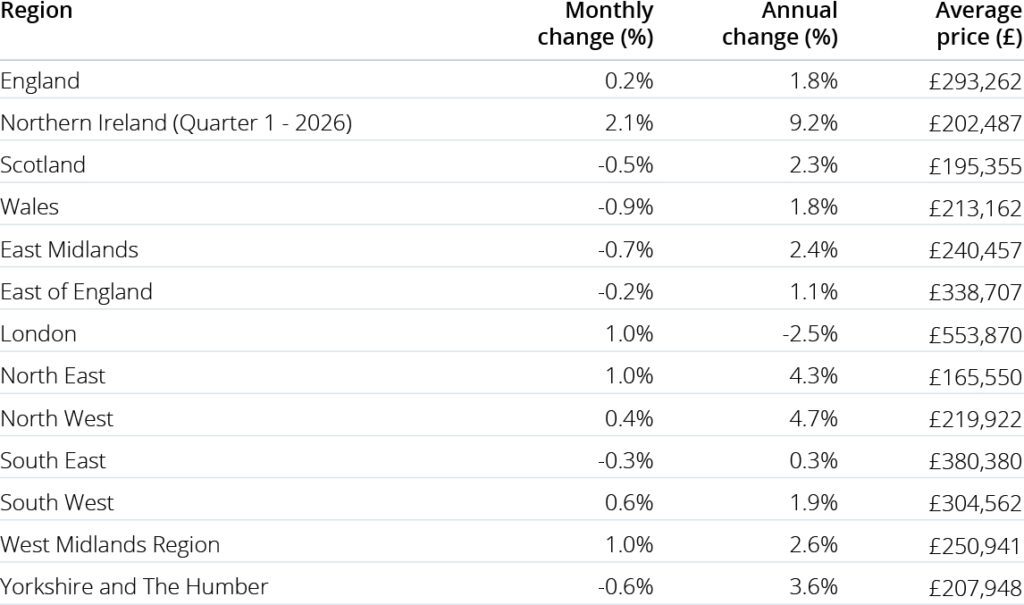
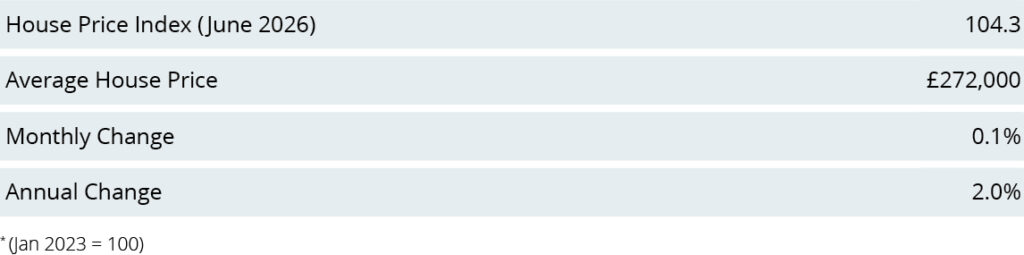
“The housing market remains subdued, and while that is not usual over the summer months, it is clear from the RICS seasonally adjusted data, that the combination of geopolitics, the domestic political climate and the cost of mortgage finance are continuing to weigh on sentiment. Significantly, the forward-looking metrics also remain downbeat, which is not the sort of climate likely to encourage housebuilders to step on the gas on existing sites or in land-buying."
Source: Simon Rubinsohn, RICS Chief Economist, August 2026
All details are correct at the time of writing (19 August 2026)
It is important to take professional advice before making any decision relating to your personal finances. Information within this document is based on our current understanding and can be subject to change without notice and the accuracy and completeness of the information cannot be guaranteed. It does not provide individual tailored investment advice and is for guidance only. Some rules may vary in different parts of the UK. We cannot assume legal liability for any errors or omissions it might contain. Levels and bases of, and reliefs from taxation are those currently applying or proposed and are subject to change; their value depends on the individual circumstances of the investor. No part of this document may be reproduced in any manner without prior permission.


© 2026 Meriden Financial Planning Limited All rights reserved